Onboarding project | Playo - Playo | GrowthX
Onboarding project | Playo
đź“„

Onboarding project | Playo

ICPs:

Criteria

ICP 1: The Social Fitness Seeker

ICP 2: The Competitive Athlete

ICP 3: The Family-Oriented Facilitator

Who they are

Young professionals & college students

Semi-pro/serious sports enthusiasts

Parents booking activities for children

Name (Persona)

Pankaj

Arjun

Aakansha

Age

18–35

25–40

35–45

Demographics

Urban, upper middle class, active

Urban, sports-driven, tech-savvy

Upper middle class, living in housing communities

Need

To socialize, stay active, reduce stress

Find serious matches & improve skill

Engage kids in safe, structured physical play

Pain Point

Difficulty coordinating group activities
Does not prefer gym as such

Hard to find quality, skill-matched games

Hard to find verified, kid-friendly venues

Solution

Easy discovery of casual group games

Structured leagues, leaderboards, filters

Bookings with verified coaches/venues

Behavior

Casual gameplay 1–3x/week, mixed gender

Regular weekend gameplay, data-driven

Weekly bookings, high parental involvement

Perceived Value of Brand

Fun, flexible, dependable

Credible, structured, high-skill

Safe, trusted, child-focused

Goals

Fitness, socializing, stress relief

Skill-building, ranking, routine, health

Child development, screen-free time

Frequency of Use Case

Moderate–High (1–3x/week)

High (3-5x/week)

Low–Moderate (weekly or biweekly)

Avg Spend on Product (₹)

₹300–₹1200/month

₹1500–₹2500/month

₹1000–₹1500/month

Value Accessibility

High – nearby venues + group invites

Medium – relies on curated match types, has organised groups with fixed invites

Medium – limited kids options

Value Experience

Moderate–High – ease + repeat fun

High – performance, tracking, opponent levels

High – safety, trust, parent-friendly flow


ICP Prioritisation:


Criteria

ICP 1: Social Fitness Seeker

ICP 2: Competitive Athlete

ICP 3: Family-Oriented Facilitator

Adoption Rate

High

— social + fitness-oriented

Moderate

— selective, high expectation

Moderate

— onboarding friction, needs trust

Appetite to Pay

Moderate to High

— price-sensitive but consistent

High

— pays for leagues, coaching, competition

High

— willing to spend for safety, quality

Frequency of Use

High

— 1–3x/week casual play

High

— regular bookings, training

Low–Moderate

— weekly/biweekly use

Distribution Potential

High

— group invites, friend networks

Moderate

— niche communities

Low

— mostly parent-driven, less social virality

TAM Estimate

~15–20M users (18–35 urban)

~4–5M users (competitive adult players)

~3–4M users (urban parents w/ kids 5–15)

Basis the Table, ICP 1 seems to be the primary target along with ICP 2


A table is shared below for your reference to put down your user goals, respective ICPs, JTBDs and validate your goals.

After analysing user behaviour of the targeted ICps, and use cases across ICPs

Primary JTBD (Functional + ~Social):

"When I want to play a sport, I want to easily find and book games or venues with like-minded people nearby, so I can stay active, social, and consistent."

  • This applies to:
    • ICP 1: Social Fitness Seeker
    • ICP 2: Competitive Athlete (with more structure and skill-matching)
  • Hence, outlining the core value of Playo: i.e. Reducing friction in discovering & joining sports activities


Goal Priority

Goal Type

ICP

JTBD

Validation approach

Validation

Primary

Functional + Social

ICP 1: Social Fitness Seeker

Make it easy to discover, join, or organize casual games with nearby friends or people with similar interests

User interviews

“I just want to find a match nearby that works for my schedule and vibe that helps me avoid gym & still keep me in shape”

Primary

Functional

ICP 2: Competitive Athlete

Provide a structured, reliable way to book skill-matched games and improve performance consistently

User interviews

“I don't want to struggle finding groups of motivated people. I want consistency and a certain sense of competitiveness when it comes to sport”


*User Interviews were only from an ICP perspective & not from onboarding since they were already onboarded users who had been using the app for months*


Onboarding Teardown:

1.jpeg

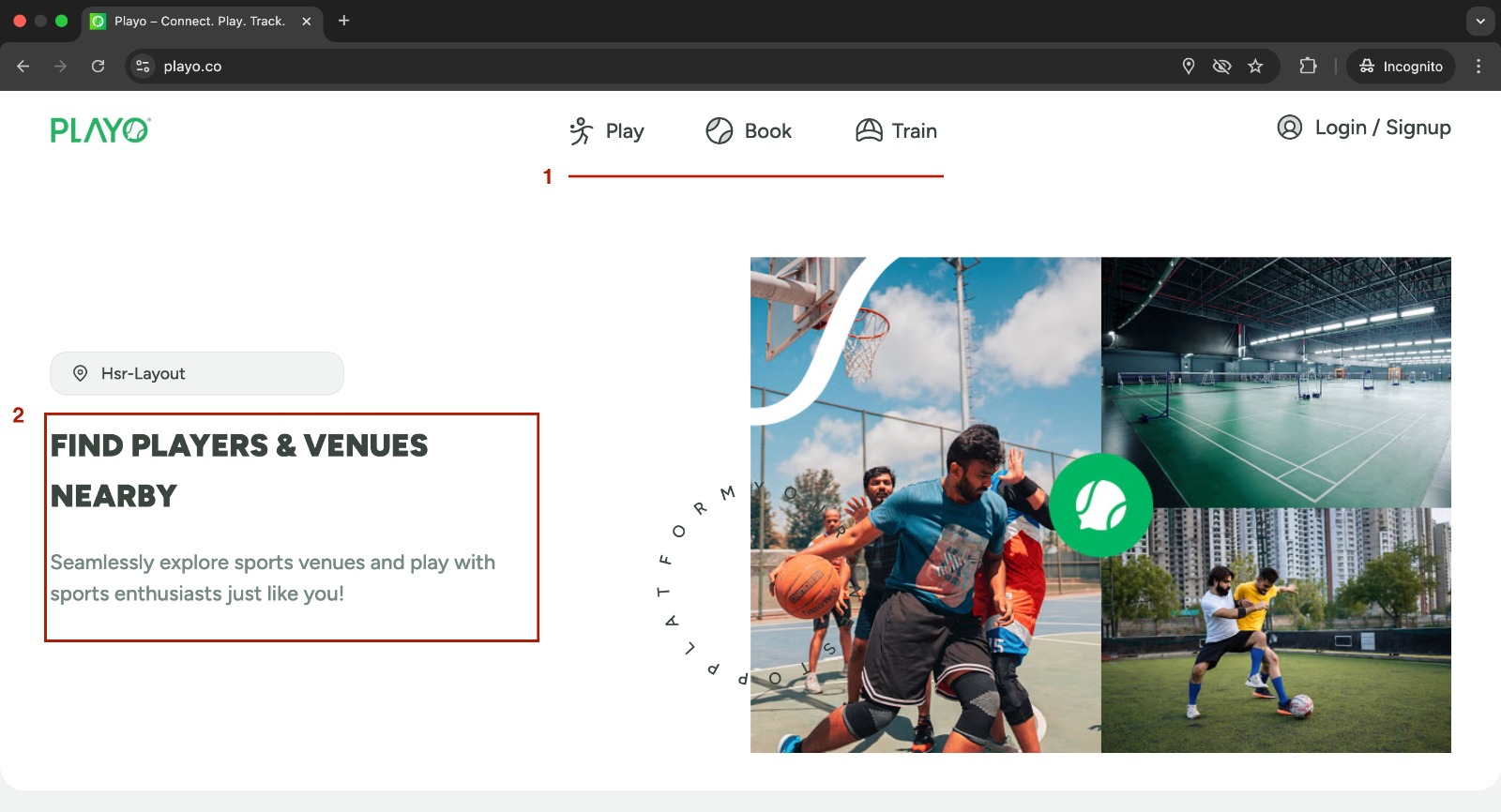
  1. What is working well on the screen and why?
    1. Overall the design seems inviting
    2. It has already taken my location to align with activities that are present in my neighbourhood
    3. On the top "1" shows the options I have available as part of the Playo application which allows user to explore the options and see what works for him
    4. Emphasising the core value prop in "2" for it's ICP and assuring them that they are at the right place
  2. What is not working and why?
    1. No clear direction for the user to follow
    2. No inviting CTA, login/signup is at the top right.
    3. User could feel flooded with a plethora of options like play, book, train
  3. What changes/improvements do you suggest can be made? Why do you think that would be better?
    1. Understanding the user in the first go i.e.understanding their purpose, whether they belong to ICP 1, 2 or 3 & directing the flow accordingly
    2. Priming them on what's to come and how to use the application
    3. Clear flow on where they want to take the user instead of leaving them all by themselves to figure out
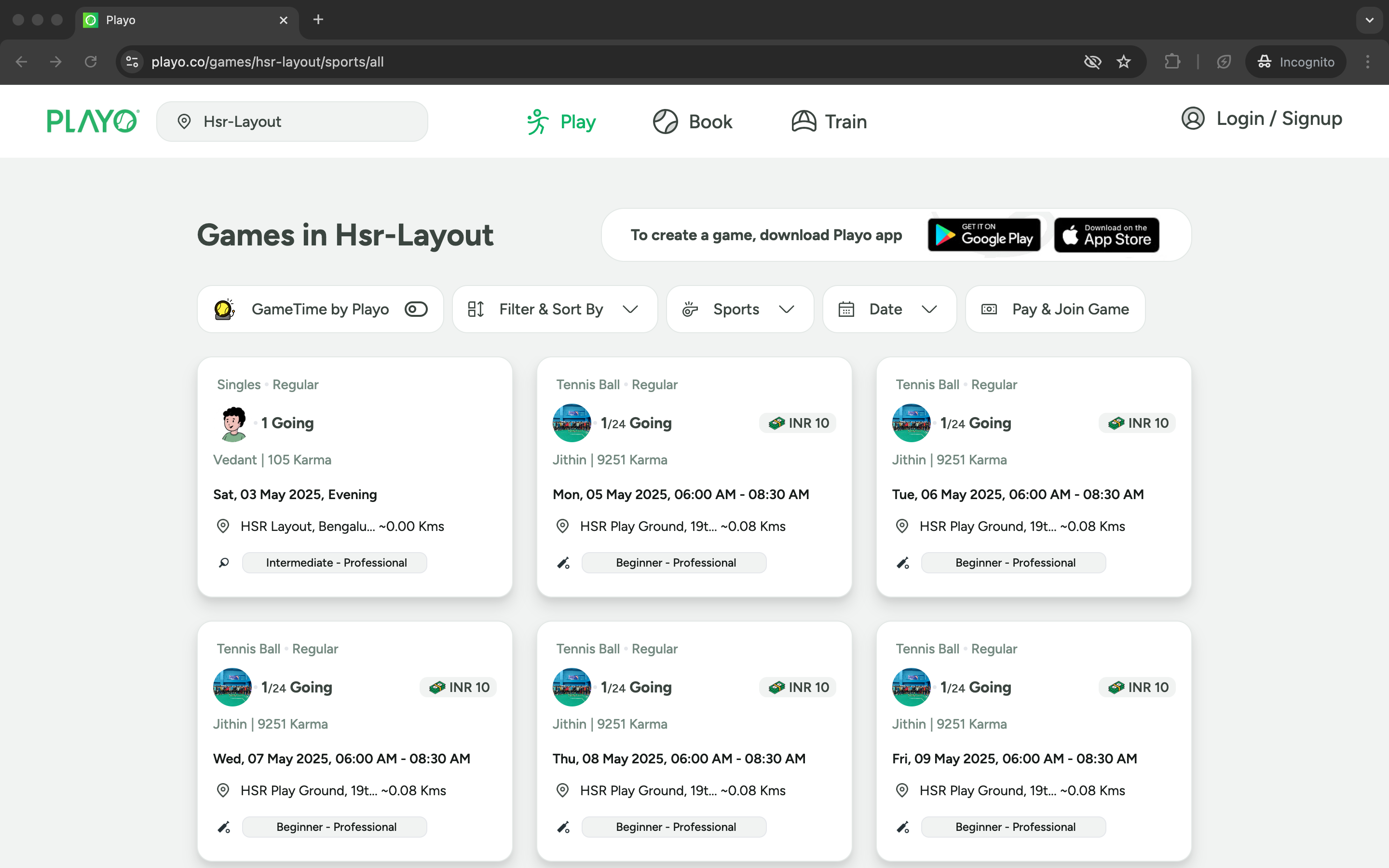

2.png*This screen pops up when you click on play at the top*

  1. What is working well on the screen and why?
    1. Shows all the ongoing games near me(basis the location it had taken on the home page)
    2. Mentions the cost as well involved to play the game wherever applicable
    3. Calls out the skills levels as well of the group playing the game
  2. What is not working and why?
    1. Did not ask me for a specific game hence showing me too many options
    2. Could be too overwhelming for a first time user, as it's an information overload and no guidance on how to book my first game or what means what on the page
  3. What changes/improvements do you suggest can be made? Why do you think that would be better?
    1. First thing that should happen when I click on play is to get a pop-up to select my sport & priming to help understand the user on what's to come
    2. A simple guide on how to join my first game, so that the user becomes familiar with the entire process and does not have to spend time figuring out the product
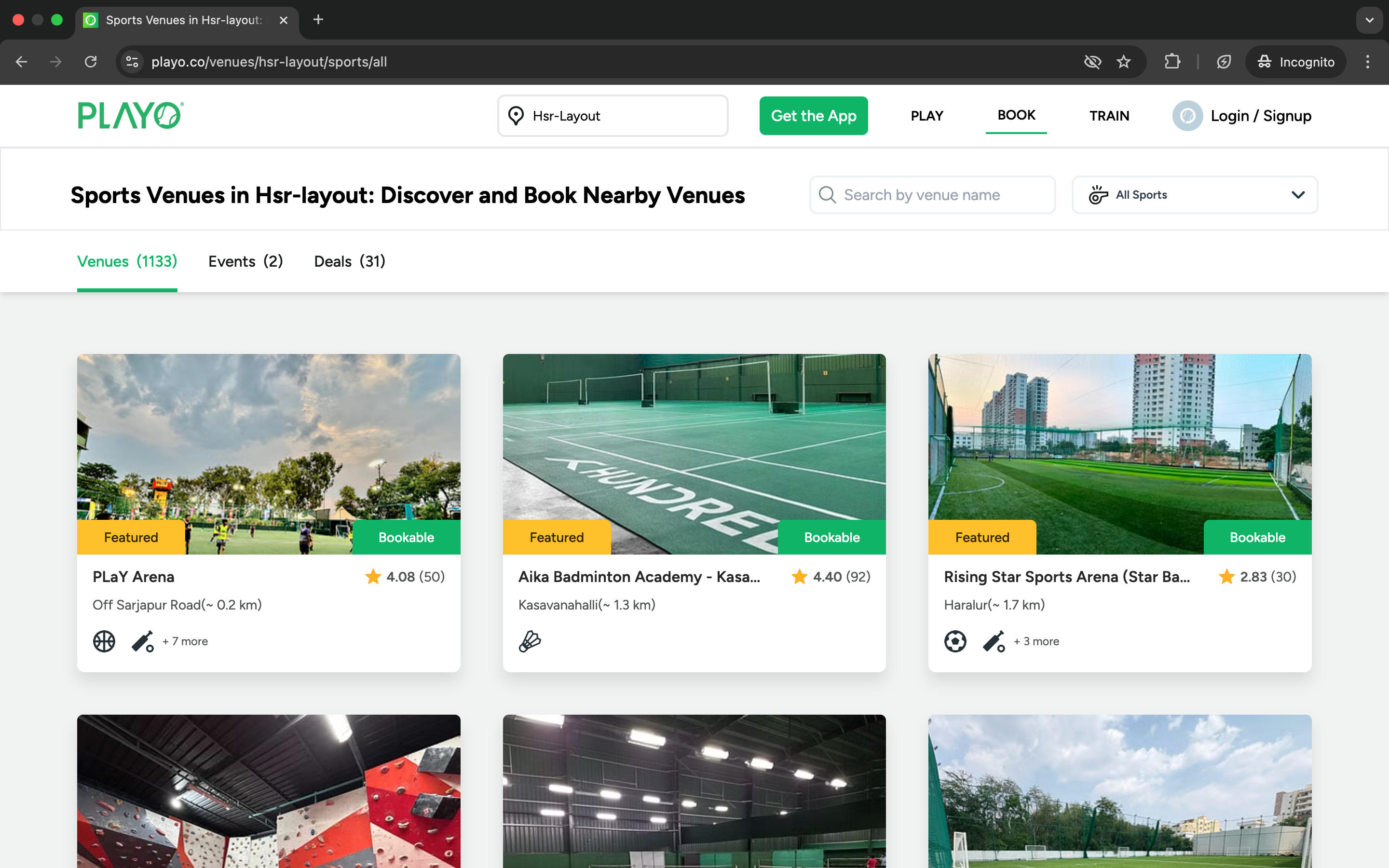

3.png*This screen pops up when you click on book at the top*

  1. What is working well on the screen and why?
    1. Neat showcasing of the locations, it's distance, sports it offers (most are intuitive)
    2. Call out of ratings of the venues & a special tag to ascertain if its a featured (sponsored) venue or not
  2. What is not working and why?
    1. Location seems extremely off for some reason on this page, not showing the correct venues even compared to the "play" screen
    2. Again, no prioritisation of any ICP or diving deep into understanding who the customer is or what they like/dislike
  3. What changes/improvements do you suggest can be made? Why do you think that would be better?
    1. Basic question about what sport I'm interested in so that only those ones I am shown
    2. Simple guide on how to book a venue and what does that mean and how I can share that with other folks
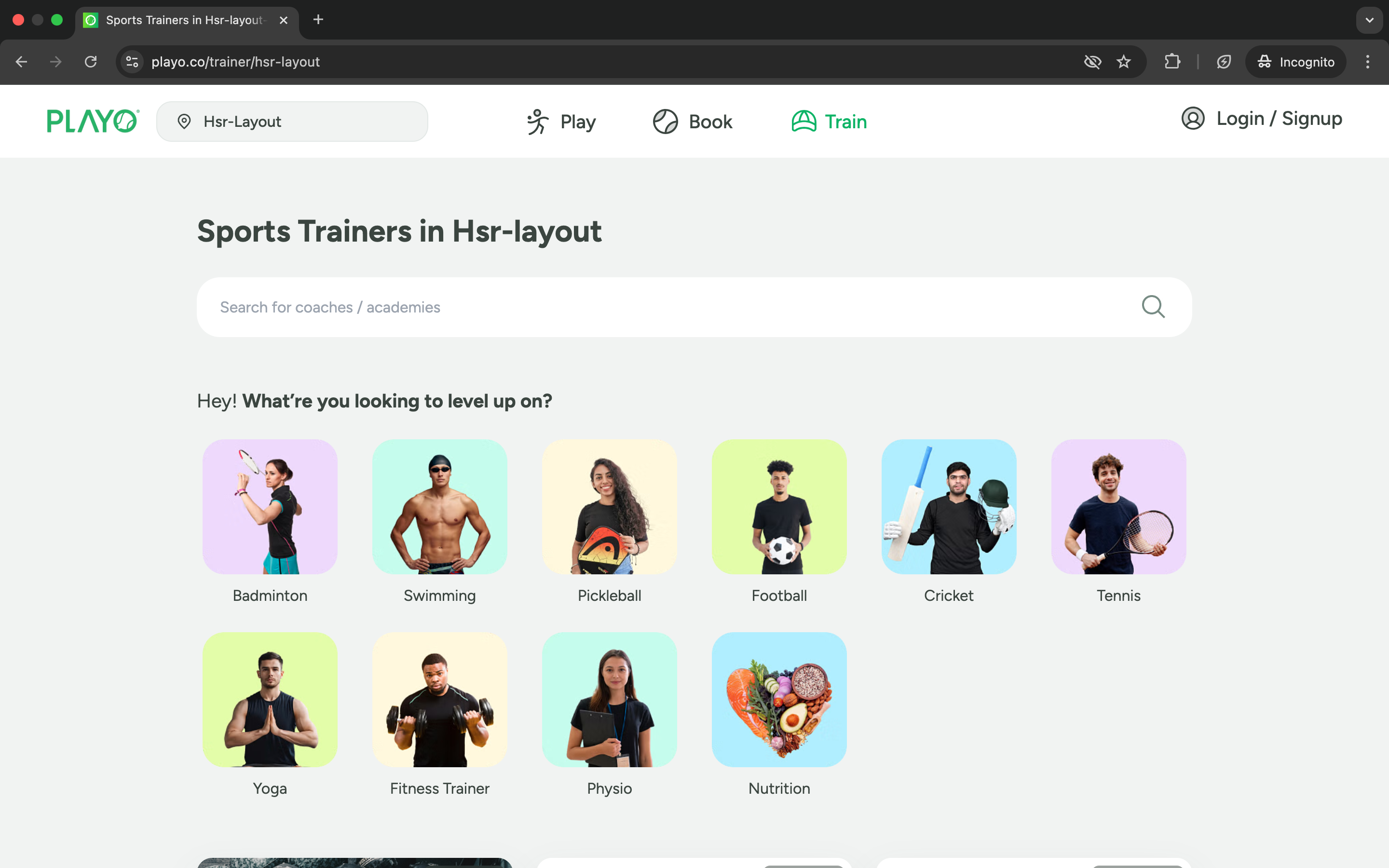

4.png*This screen pops up when you click on Train at the top*

  1. What is working well on the screen and why?
    1. Clearly shows me what all sports/categories where trainers are available
  2. What is not working and why?
    1. Not aligned with how they have shown offerings on the other pages
    2. No coherence between the colours used in the background for the different sports
    3. Nutrition to should be a category like this when it comes to sports trainers
    4. Too many choices -> Hick's Law
  3. What changes/improvements do you suggest can be made? Why do you think that would be better?
    1. Can drive this page basis my inputs, a simple understanding on what I want to do and the sports I want to target to minimise the offerings and make the decision clear
    2. A way to separate out individual coaching/trainers from academies to make it visually clear & allow users to make easy decisions
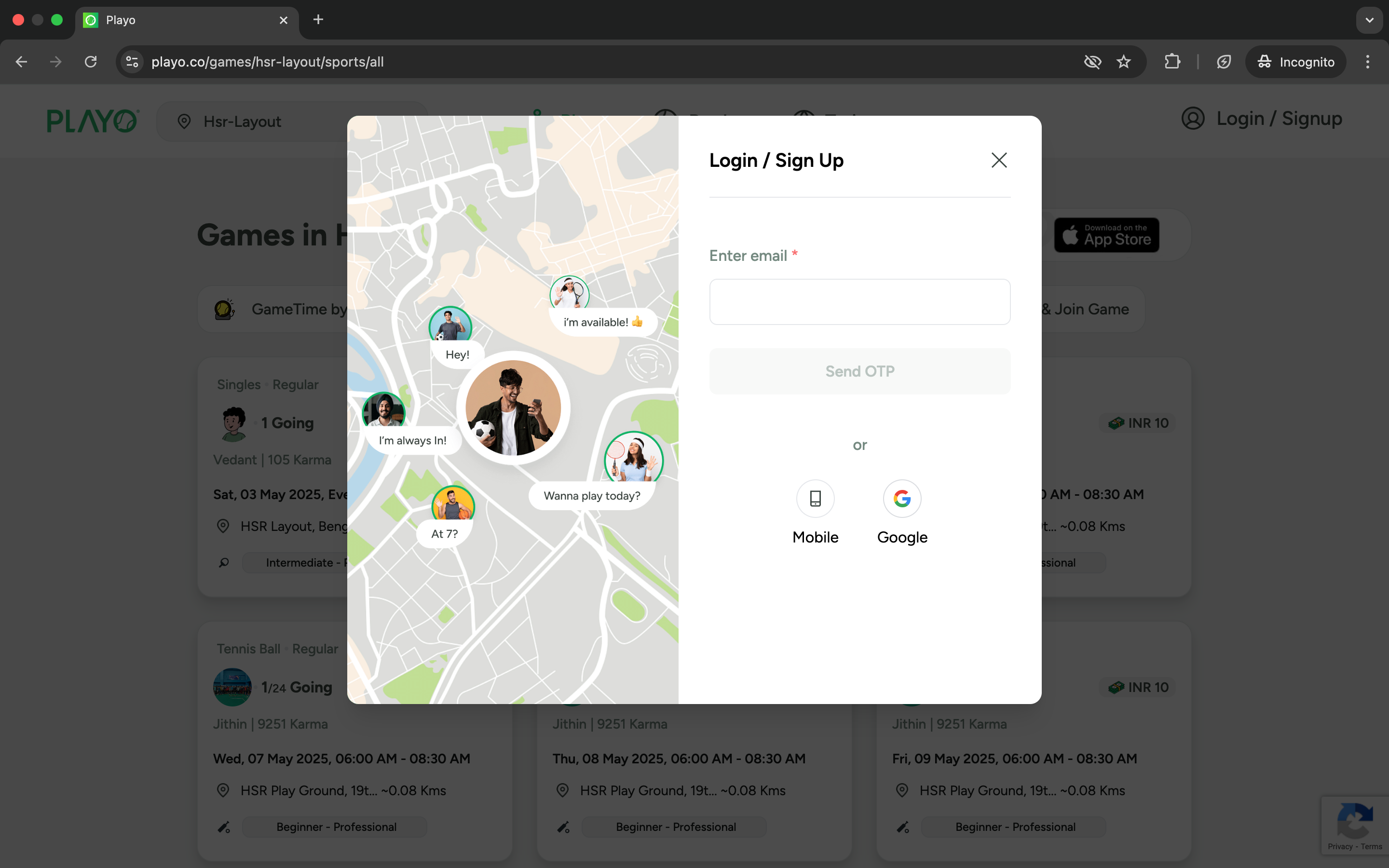

5.png

  1. What is working well on the screen and why?
    1. Again targets the ICPs nicely in the left hand image, reiterating the message & the cycle of why they are here and what purpose this serves
    2. Standard options of email, mobile & gmail login
    3. All the sign up entry points are OTP driven & not linked based sign ups
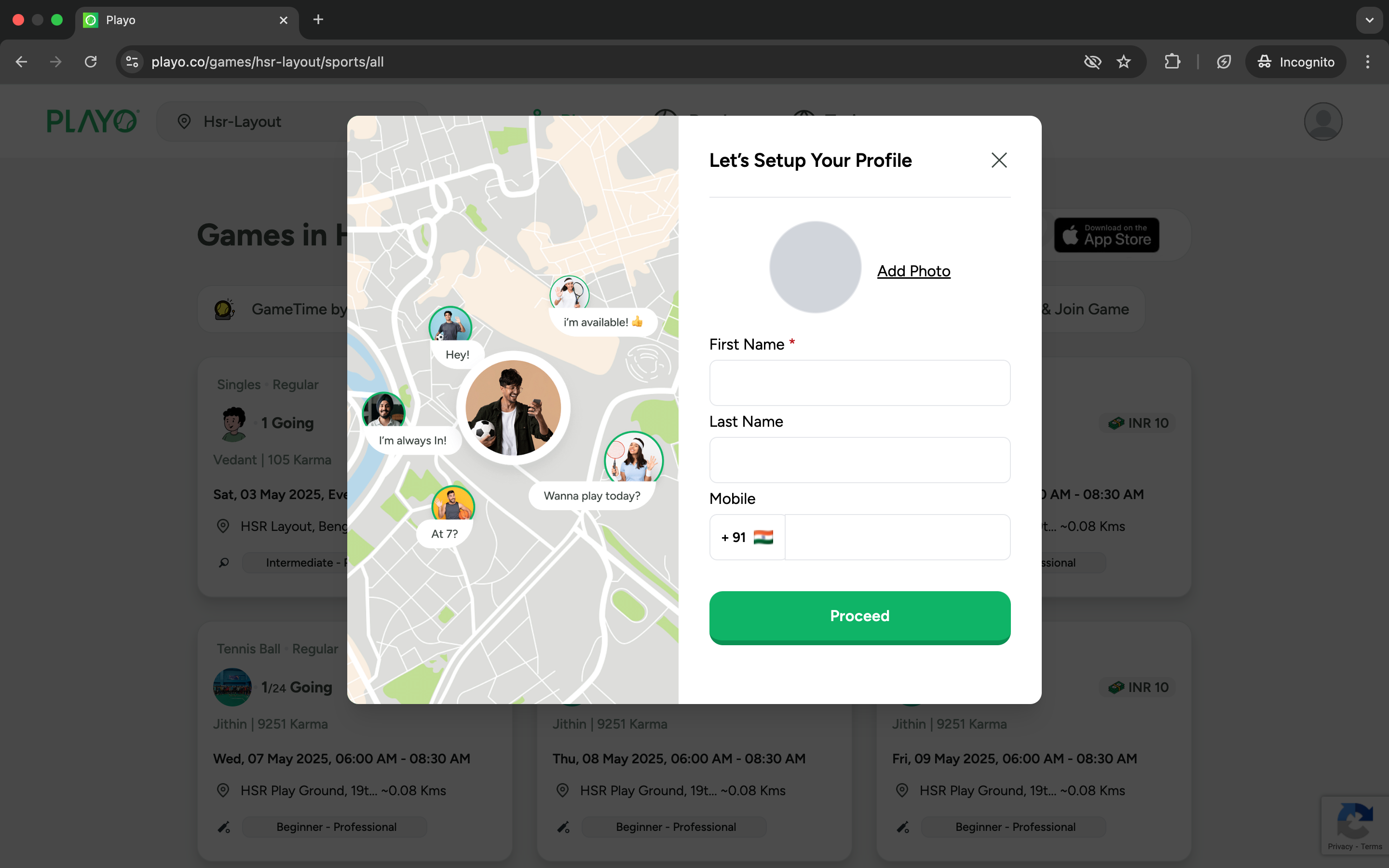

6.png

  1. What is working well on the screen and why?
    1. Taking in my basic info
    2. Only requires my First Name as the mandatory field, no need to give my phone number just yet if I prefer it that way
  2. What is not working and why?
    1. I don't think taking/asking for photo as this point is a necessity, the user is yet to even experience the product
    2. No question regarding preferences of sport
  3. What changes/improvements do you suggest can be made? Why do you think that would be better?
    1. Add a section to ask about sport of choice, which would make getting to the activation metric a lot easier


Various Hypothesis, Justification & Metrics that need to be tracked:


  1. User completes their first game booking within 24–48 hours of installing the app.

Reasoning:
Completing a booking early demonstrates immediate value realisation from the app. It indicates that the user has understood the core function — booking sports venues — and has overcome any barriers related to timing, trust, or availability. The action typically leads to higher retention, especially when it's a seamless experience. Users who complete a game quickly are more likely to return for more, invite others, or even become recurring users.

Metrics to track:

  • % of new users who book and complete a game within 2 days
  • 30-day retention of users who complete first booking vs those who don’t
  • Booking-to-completion conversion rate
  • Average time to first booking

  1. User joins or creates a group/team with at least 3 other members..

Reasoning:
Playo is inherently social — players often coordinate in groups. Group participation reflects higher commitment and dramatically increases stickiness. These users are likely to return due to peer accountability and shared schedules. It also unlocks secondary features like recurring bookings or team challenges, further deepening engagement.

Metrics to track:

  • % of new users who join/create a group within 5 days
  • Repeat bookings among grouped users vs solo users
  • Retention rate over 30/60 days for grouped vs non-grouped users
  • Avg number of bookings per user in each group

  1. Users who use the "Find a Player" or send a game invite within their first 3 sessions are activated.

Reasoning:
This behavior signals intent to play and to do so socially, which aligns closely with core value delivery. It means the user isn't just browsing but is actively trying to organize or join a session. This use of community matchmaking tools also introduces them to new engagement surfaces like chat, notifications, and feedback loops.

Metrics to track:

  • % of users using “Find a Player” or sending an invite in first 3 sessions
  • Conversion rate to first booking from this cohort
  • Avg number of sessions per week for these users
  • Retention rate after 14 and 30 days

  1. Users who complete two bookings within 10 days of sign-up are activated.

Reasoning:
If a user selects their preferred sport(s) and location during onboarding, they are more likely to find relevant games and venues faster, leading to increased engagement and eventual conversion.
This setup reduces cognitive load by filtering irrelevant content and provides an early sense of personalization. It signals mild commitment and primes the user to explore nearby activities. While not a strong standalone activation, it creates the groundwork for faster value realization by aligning the app with the user's intent.

Metrics to track:

  • Drop-off Rate before/after Preference Screen
  • Booking Conversion Rate (with vs. without preference selection)
  • In-App Clicks on Suggested Matches/Games

  1. A user who enrolls in a structured offering (coaching, league, tournament) within 14 days is activated.

Reasoning:
Structured formats lock users into routines (e.g., weekly training), increasing long-term engagement. These users are more committed and often have higher LTV due to recurring sessions and higher ARPU products. They also tend to convert into brand advocates or invite other participants.

Metrics to track:

  • % of users enrolling in structured formats within 14 days
  • Avg session frequency of these users vs casual users
  • Retention and ARPU of structured vs unstructured users
  • Referral rates or group formation from structured users


Given we've listed out multiple hypothesis, let's pick/prioritise them on the basis of the fundamental questions on which we judge activation metric for an early stage product:

  1. Does this metric demonstrate user commitment?
  2. Does the user realise value from your product?
  3. Does this metric affect conversion?


#

Hypothesis

Demonstrates Commitment?

Realizes Product Value?

Affects Conversion?

1

User completes their first game booking within 24–48 hours of installing the app.

âś… Strong signal of intent and time investment

âś… Core value (game play, sport activity) is realized

✅ Directly impacts activation → conversion

2

User joins or creates a group/team with at least 3 other members.

âś… Social commitment, increases long-term stickiness

⚠️ Partial – value depends on actual game participation

âś… Increases likelihood of return/conversion

3


Users who use the "Find a Player" or send a game invite within their first 3 sessions are activated.


âś… Shows stickiness and developing habit

âś… Reinforces product value over time

⚠️ Indirect – post-activation, supports retention

4

User adds a sport preference and location, enabling personalised discovery.

⚠️ Weak commitment – easy to do

⚠️ Value not realized until actual booking

âś… Helps targeting and conversion later

5


User enrolls in a structured offering (coaching, league, tournament) within 14 days is activated.


âś… Social trust + intent to spread usage

⚠️ Yes, but success depends on the coach

âś… Can drive new installs + boost conversion funnel


With this we can conclude that the first hypothesis is the one which we should go for as it ticks all the boxes.


[object Object],[object Object],[object Object],[object Object]

Brand focused courses

Great brands aren't built on clicks. They're built on trust. Craft narratives that resonate, campaigns that stand out, and brands that last.

View all courses

All courses

Master every lever of growth — from acquisition to retention, data to events. Pick a course, go deep, and apply it to your business right away.

View all courses

Courses

Built by Leaders From Amazon, CRED, Zepto, Hindustan Unilever, Flipkart, paytm & more
View All Courses
Advanced Growth Strategy
Brand Led Growth
Creative Strategy
Storytelling
Data Led Growth
Event Led Growth
Partnership Led Growth
Tech for Growth
Go to Market
Growth Model Design

Crack a new job or a promotion with ELEVATE

Designed for mid-senior & leadership roles across growth, product, marketing, strategy & business

View All Resources

Learning Resources

Browse 500+ case studies, articles & resources the learning resources that you won't find on the internet.

Patience—you’re about to be impressed.